
Search Colorado Court Records
Colorado offers three paths, and each serves a different purpose. The free Judicial Branch Docket Search shows hearing calendars for state district and county courts. It is not a full party-history search and does not provide pleadings or orders. Approved commercial vendors provide paid, real-time registers of actions, but those entries are unofficial and exclude document images. The filing court remains the custodian of the official file. Municipal ordinance cases also remain outside the state search tools. Start with the docket when a date or likely venue is known, then use the case number to reach the correct clerk.
Good search data prevents delay. Gather the party's full name and spelling variants, a likely filing year, the county or city, and any case or citation number. Colorado case numbers split into filing year, case class, and sequence. A `CR` class often points to a district criminal file, while `DR`, `PR`, `C`, `T`, and `S` identify other case families. These codes guide the search but do not prove a result. The clerk's register and signed order control.
- Choose a date range and at least one more filter in Docket Search. A date by itself will not run the search.
- Filter by judicial district, county, courthouse, court type, division, party, attorney, or known case number.
- Save the complete case number, court, county, hearing type, and party spelling from a useful result.
- Use a Judicial Branch approved register vendor if a paid, broader event history is needed.
- Request the register, orders, or certified copies from the filing court through the county route.
The official court records gateway illustrates the available search and request paths.
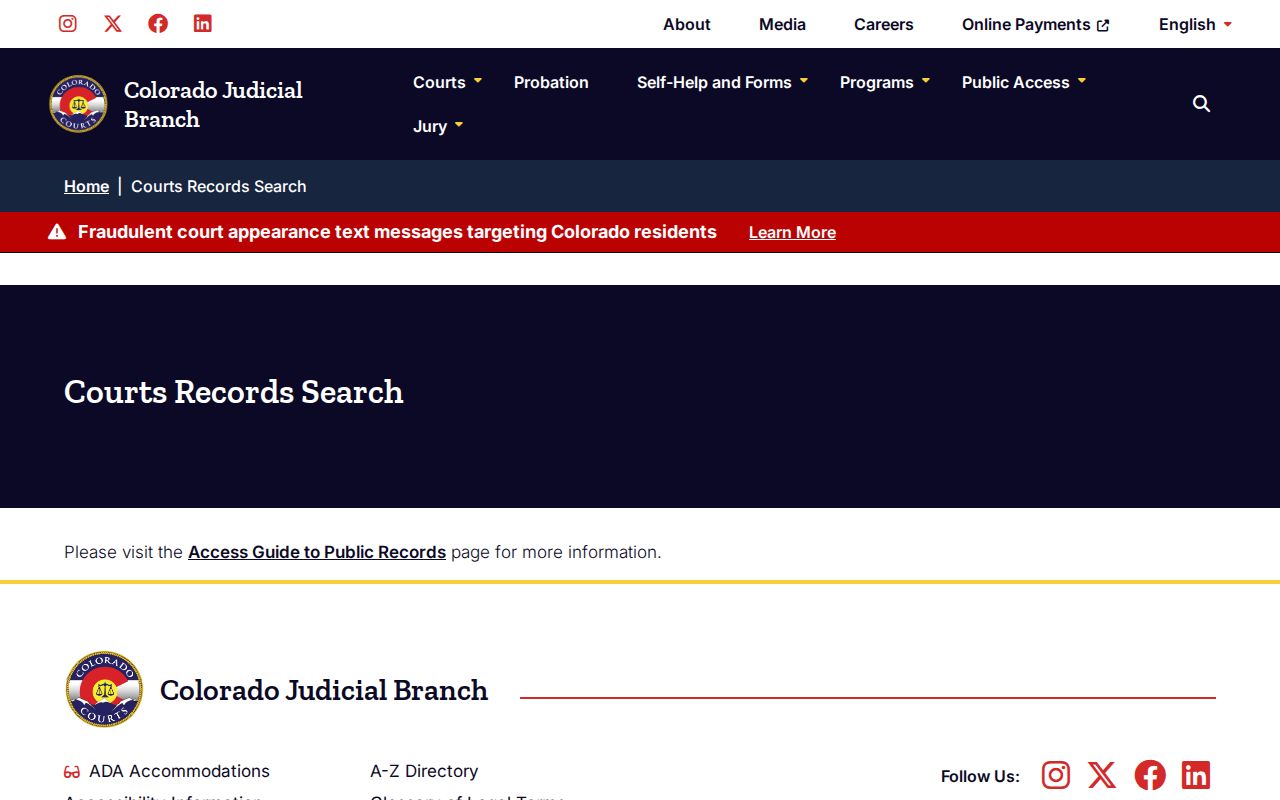
Its access choices reinforce the core rule: a calendar result helps locate a case, while the clerk supplies the official record.
Colorado Court Docket Fields
The statewide calendar accepts several location and identity fields. Location filters matter because a name-only search across long periods is not available. The current district list includes the 23rd Judicial District for Douglas, Elbert, and Lincoln Counties. Older material may still show 22 districts. Party and business searches use different modes, while attorney searches can use a name or Colorado bar number.
| Field | Use | Important Limit |
|---|---|---|
| Date range or date | Sets the hearing window | Must be paired with another filter |
| District, county, courthouse | Narrows the filing location | Municipal courts are excluded |
| Year, class, sequence | Reconstructs a known case number | Exact components are needed |
| Individual or business | Searches a named party | Spelling and date limits can hide matches |
| Attorney name or bar number | Finds a lawyer's settings | Shows calendar events, not case documents |
A result can show hearing date, start time, estimated duration, party name, case number, hearing type, location, appearance type, and courtroom. It cannot establish that the hearing occurred. It also cannot prove conviction, dismissal, sentence, or an unpaid balance. Those findings require the register and signed orders.
Colorado Court Records Structure
Colorado's Supreme Court leads a unified, state-funded Judicial Branch. One statewide Court of Appeals hears most appeals from District Courts in three-judge panels. District Courts serve all counties through 23 judicial districts and hear felonies, unlimited civil cases, domestic relations, juvenile matters, probate, and mental-health cases. County Courts handle civil claims through $25,000, small claims, evictions, misdemeanors, state traffic cases, protection orders, and early felony proceedings. Municipal Courts enforce city ordinances outside the Judicial Branch. Their files stay with the city. Two features make Colorado court records unusual. Seven Water Courts follow river basins, not county boundaries, and their judgments go directly to the Supreme Court. Denver has separate constitutional District, Juvenile, Probate, and County Courts. Elsewhere, probate is a District Court function. The full Colorado court system profile explains these routes.
Normal appeal path: Municipal or County Court › District Court › Colorado Court of Appeals › Colorado Supreme Court.
- Supreme Court
- Final state review, selected direct appeals, published opinions, and appellate clerk records.
- Court of Appeals
- Statewide intermediate review through appellate dockets, briefs, orders, and opinions.
- District Court
- Felony, unlimited civil, domestic, juvenile, and probate records held by the filing county's Clerk of Court.
- County Court
- Misdemeanor, traffic, limited civil, eviction, and small-claims records held by the local Clerk of Court.
- Municipal Court
- City ordinance and local traffic records held by the issuing city's court clerk.
The current district directory shows the live statewide structure.
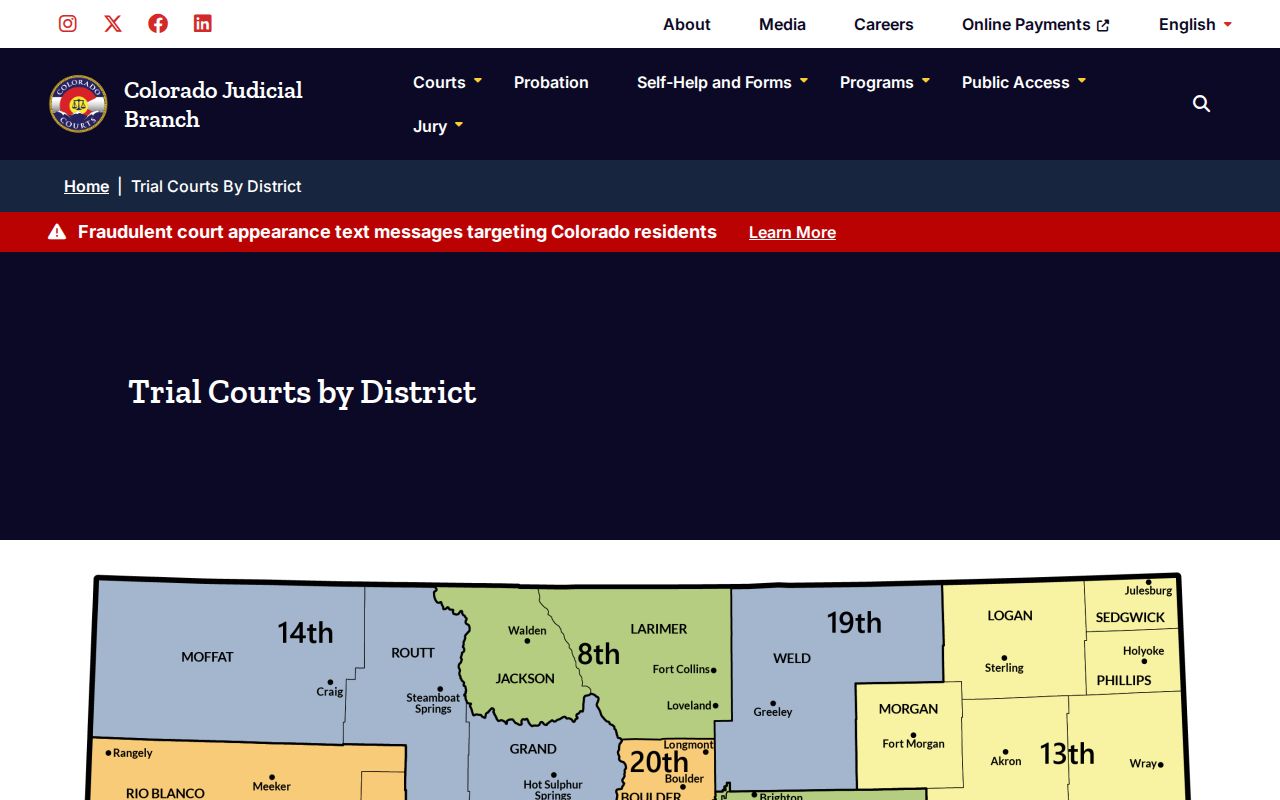
Use the live directory when an older map still assigns counties to the former 22-district arrangement.
Colorado Court Record Types
The initiating paper and case class determine where a Colorado record lives. District civil files can include complaints, answers, motions, admitted exhibits, orders, judgments, and enforcement papers. County civil files cover lower-value claims, evictions, garnishments, and small claims. Criminal files separate the first county-court complaint or advisement from a later District Court felony prosecution. Domestic files hold petitions, service, parenting and support papers, agreements, orders, and decrees. Probate files can include wills, applications, letters, inventories, claims, accountings, and closing papers.
- Criminal: charges, pleas, motions, verdicts, dispositions, sentences, restitution, and probation entries.
- Civil: claims, service, responses, hearing events, judgments, liens, writs, and satisfactions.
- Domestic: divorce, legal separation, child-related orders, support, and later enforcement.
- Probate: estates, wills, trusts, guardianships, conservatorships, and fiduciary reports.
- Traffic: citations, pleas, settings, disposition, fines, costs, and failure-to-appear events.
Discovery exchanged between parties is not automatically a court record. Arrest reports stay with law enforcement unless filed. Marriage licenses belong to the county clerk and recorder, not the trial-court Clerk of Court. The Judicial Branch's county court locator shows how trial courts are organized.
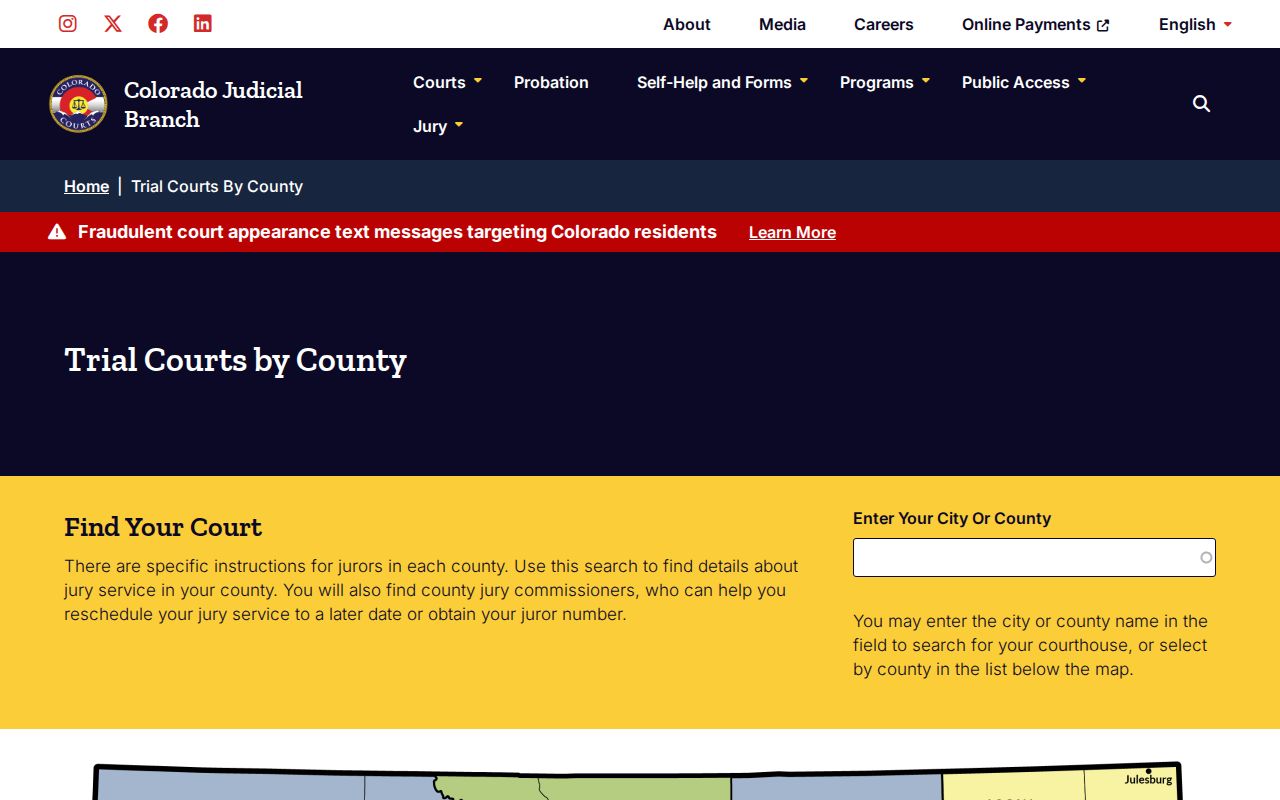
The county entry identifies the correct local court without treating every public record as part of one database.
Read Colorado Court Records
A typical Colorado case number combines a four-digit year, an alphabetic class, and a sequence. The caption then identifies the court, county, parties, and number. Public metadata can show filing date, assigned judicial officer, case class, status, attorneys, settings, and a chronological register of actions. Criminal entries add counts, statutes, offense level, bond, plea, disposition, sentence, restitution, and probation. Civil ledgers may show judgment principal, costs, interest, garnishment, and satisfaction.
- Case number
- The filing year, case class, and local sequence.
- Caption
- The court, filing county, parties, and case identity.
- Register of actions
- The event list for a case. It is not every underlying document.
- Disposition
- The outcome of a charge or case, including dismissal, acquittal, conviction, or deferred judgment.
- Judgment or sentence
- The signed result and the terms ordered by the court.
- Redaction
- Removal of protected details while the rest of a record remains accessible.
- Sealing
- A legal restriction on public access. It is not the same as physical destruction.
Never infer a final result from a calendar label such as sentencing or case closed. Read the signed disposition, judgment, and any later appellate mandate or reopening entry.
Colorado Statewide Record Systems
Some Colorado records use a statewide agency rather than a filing-county court. Each system has a firm boundary. The DOC locator covers state prisoners and supervised offenders, not county jail bookings. CBI criminal history combines fingerprint-supported Colorado arrest and reported disposition data, but it is not a court file or nationwide FBI report. DMV maintains driving status, convictions reported to it, points, and restraints. CDPHE handles birth and death records while routing marriage licenses to county recorders and divorce decrees to District Courts.
| System | What It Holds | Key Exclusion |
|---|---|---|
| Colorado DOC Offender Search | State custody and supervision profiles | County jail rosters |
| CBI Criminal History | Fingerprint-supported arrest and reported outcomes | Full pleadings and some excluded events |
| Colorado DMV Driver Record | License status, reported convictions, points, restraints | Court pleadings and warrant clearance |
| CDPHE Vital Records | Vital certificate services and routing | Original marriage licenses and divorce decrees |
| Colorado VINE | Participating custody status and alerts | Court findings and guaranteed real-time coverage |
The Colorado Judicial Branch home page is the central court-system starting point.
Agency tools should be selected by record type, not treated as interchangeable background checks.
Colorado Court Records Access
Colorado court access begins with the record's custodian. Chief Justice Directive 05-01 governs public, courthouse-only, remote, bulk, compiled, and excluded court records. CORA applies to qualifying administrative public records, while CCJRA governs criminal justice records held by law enforcement and related custodians. A request for a filed pleading or order goes to the court clerk. An arrest report goes to the arresting agency. CBI supplies its own statewide history. Sending a broad CORA request to an unrelated county office does not replace these channels.
Key access rules:
Chief Justice Directive 05-01 sets the court-record access framework and current remote-access limits.
C.R.S. Title 24 contains CORA, CCJRA, and adult criminal-record sealing provisions.
C.R.S. § 19-1-304 limits access to juvenile court, social, and law-enforcement records.
The Colorado Attorney General's CORA overview is the source assigned to the statewide open-record image.
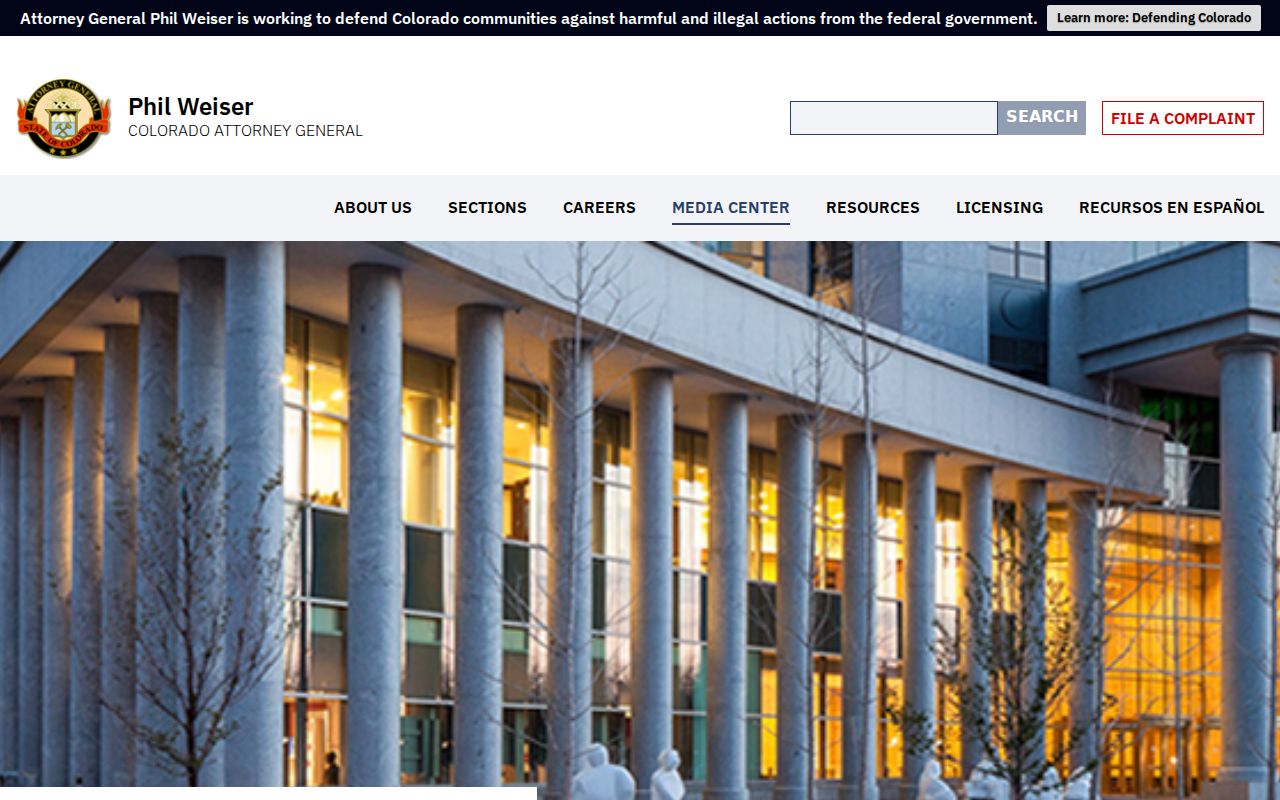
CORA guidance helps with agency records, but judicial case files remain governed by court policy and the filing clerk's process.
Restricted Colorado Court Records
Juvenile, adoption, mental-health, medical, victim, protected-address, and personal-identifier material can be restricted or redacted. A case line may remain public while an attachment is unavailable. A record missing online might still be inspectable at a courthouse, or it may be suppressed by the display system. No result can also mean the wrong date, spelling, county, or court. These conditions are not interchangeable.
Adult criminal relief in Colorado is usually called sealing. Juvenile relief may use expungement. Eligibility depends on disposition, offense type, completed sentence, later cases, and statutory waiting rules. A signed sealing order restricts public court and CBI access, yet authorized agencies may retain access. Since July 2024, CBI no longer charges its own fee to process a court sealing order. Court filing and legal costs may still apply.
Colorado Court Records by County
The filing county controls most trial-court files, even when a judge serves several counties or a party now lives elsewhere. Colorado's six largest counties illustrate different routes, from the high-volume Fourth Judicial District to Denver's separate constitutional courts and the new 23rd Judicial District. Each card opens the local court-record site. Use the case caption, citation, or docket result to choose the county. A city ordinance case must still go to the municipal court named on the citation.
El Paso County
Colorado Springs · Largest county court system by 2020 population rank
Denver County
Denver · Separate District, County, Juvenile, and Probate Courts
Arapahoe County
Littleton · Sole county in the reconfigured 18th Judicial District
Jefferson County
Golden · First Judicial District metro court system
Adams County
Brighton · Seventeenth Judicial District metro court system
Douglas County
Castle Rock · Part of the new 23rd Judicial District
Browse the full directory of all 64 Colorado counties to open the court records site for any county.
Colorado Court Records Fees
Search and copy costs depend on what is requested. Supplying the case number avoids a name-search fee and reduces staff time. A register of actions is often the least costly first document because it identifies the orders or pleadings worth ordering. State base charges do not include every postage, offsite retrieval, research, redaction, vendor, card, or local service cost. Confirm the estimate before paying.
| Item | Current Statewide Amount |
|---|---|
| Plain court copy | $0.25 per page; parties and their attorneys have a $15 page-copy cap |
| Certified or exemplified copy | $20 per document, plus applicable copy costs |
| Name search | $5 when the case number is unknown |
| Transcript of judgment | $25 |
| Certificate of satisfaction | $20 |
| Research or redaction | $30 per hour after the first hour, billed in quarter hours |
Parties may request a fee waiver in qualifying litigation, but a court waiver does not automatically cover commercial vendors, sheriff service, recorder certificates, postage, or federal PACER charges.
Colorado Court Records History
Colorado's modern unified Judicial Department grew from a major 1966 constitutional revision that strengthened central administration and merit selection. The Court of Appeals was re-established as the modern intermediate court in 1969 and 1970. Water legislation from 1969 organized seven judicial divisions by drainage basin. That structure still affects venue, notice through monthly water resumes, and direct Supreme Court appeals.
Electronic filing and commercial registers later improved access without creating a free statewide document store. The Judicial Branch organization page supplies the statewide administrative context shown in the assigned image.
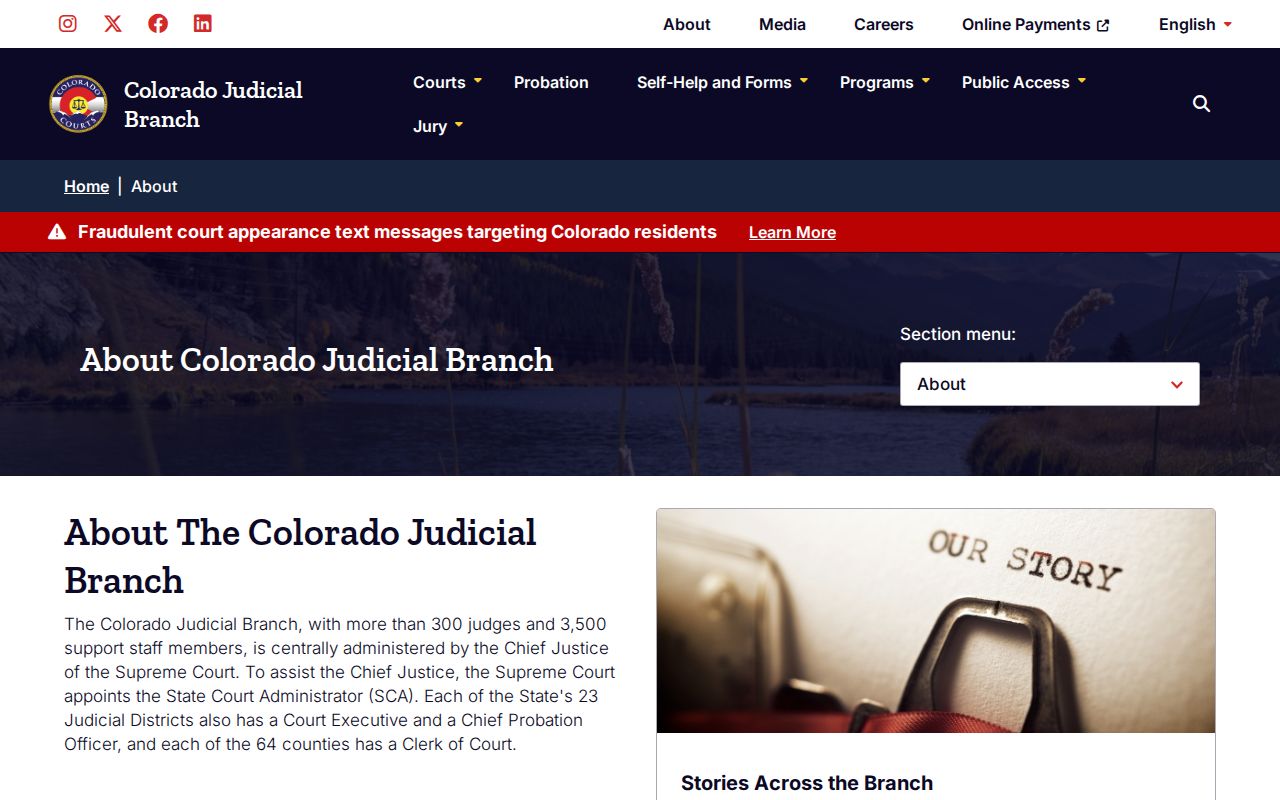
The structure remains centralized, but trial records stay decentralized with the filing courts and municipal systems.
Verify Colorado Court Records
Dynamic records change. Charges may be amended, hearings continued, warrants recalled, and cases reopened. A vendor entry can lag a signed order. A jail roster can show an allegation that the prosecutor never files, while CBI can lack a disposition that the court already entered. Corrections begin with the originating custodian. Court errors go to the filing clerk or judicial process, CBI mismatches use its challenge channel, DMV errors require its correction process, and jail entries go to the sheriff.
Free opinion and docket resources can help with research, but they do not replace official files. The authorized nonprofit CourtListener is the source of the assigned research image.
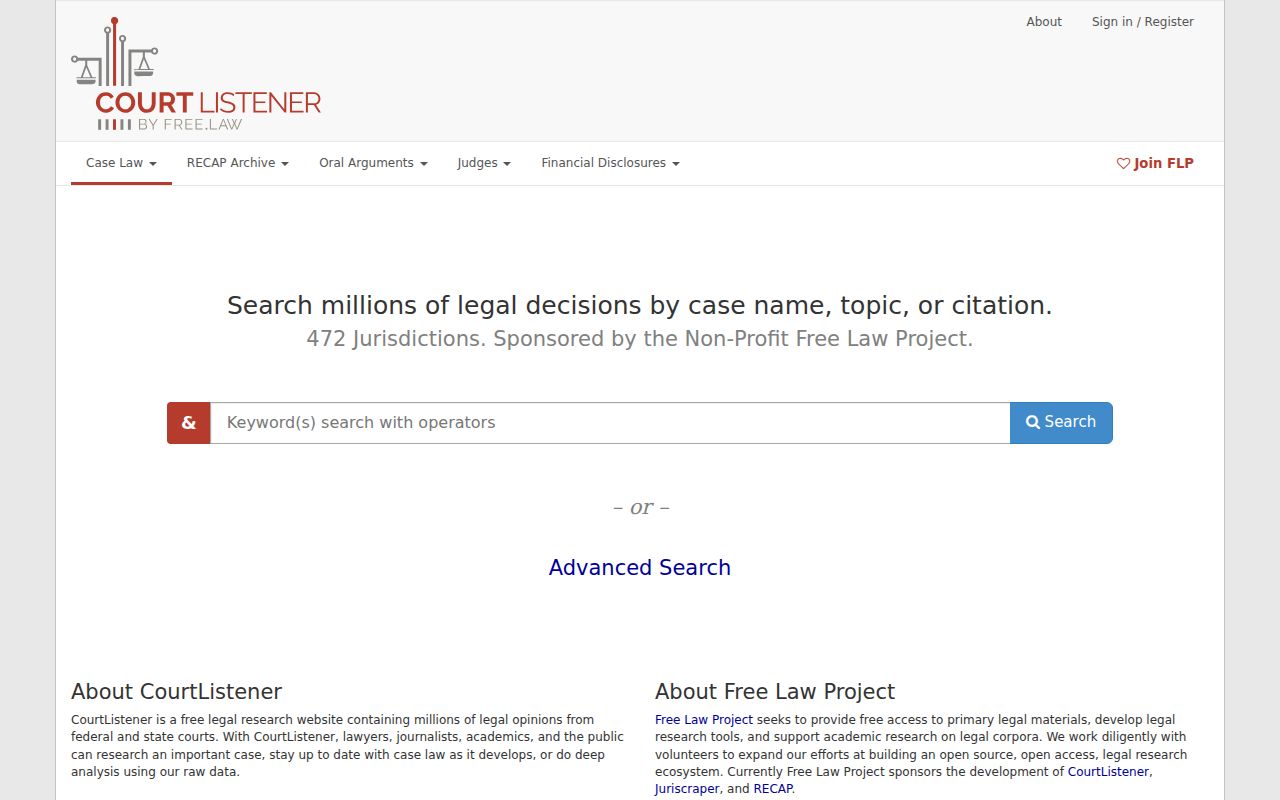
Use a court-issued certified copy when a record must serve as legal proof.
Note: Confirm the latest case status with the filing clerk before relying on a calendar, vendor register, jail roster, or agency profile.
Colorado Court Records Questions
Is there a free statewide case search?
Colorado provides a free statewide hearing calendar, not a free full case-file or all-years party search. The docket requires a date plus another filter and excludes municipal courts. Paid approved vendors can show broader registers of actions. Official pleadings, orders, judgments, and certified copies still come from the filing court.
Why does a name search show nothing?
The search may use the wrong date, spelling, court, or county. The case may be municipal, federal, old, sealed, offsite, or absent from the current calendar because no hearing is set. Try reasonable spelling and date variants, then use the likely county clerk or municipal court. Do not treat no result as proof that no record exists.
Does an arrest record prove conviction?
No. An arrest, booking entry, or filed charge is not a judgment of guilt. Read the count-by-count disposition and signed judgment. A complaint can be amended, a charge dismissed, or a deferred judgment later completed. CBI history can help identify statewide events, but the court order remains the best source for the result.
Where are federal Colorado cases?
Federal cases use the U.S. District Court for the District of Colorado, the federal Bankruptcy Court, the Tenth Circuit, and PACER. They do not appear in the state docket merely because the events occurred in Colorado. Federal prisoners are located through the Bureau of Prisons, not Colorado DOC.