
Active Warrants in Colorado
Colorado judges issue arrest and search warrants after the required legal showing, while a judge can issue a bench warrant within an existing case after a missed appearance or other noncompliance. The public-facing record may sit with the county sheriff, the state Clerk of Court, or a municipal court. Law enforcement also uses CCIC and NCIC, but those restricted systems are not public warrant portals. A free court docket can reveal a warrant-related event, yet it is only a hearing calendar and cannot provide statewide clearance.
No public list combines every Colorado county, city, district, probation, or out-of-state hold. Fresh entries can lag, sealed matters are withheld, and a municipal warrant may never appear in the Judicial Branch docket tool. Start with the Colorado county directory, then check each relevant sheriff and the exact court named on the case or ticket. A person who lived elsewhere when the case began should search that earlier jurisdiction too.
Public lists also vary in scope. Some offices provide a searchable roster, some issue a PDF list, and others confirm only by phone or in person. A most-wanted page is a selected set of cases, not the full warrant inventory.
A Colorado court case can contain more than one warrant event. A bench warrant may be issued, served, recalled, or quashed while the underlying charge stays open. A later setting, bond change, or dismissal can follow. Save the complete case number and ask for the current register plus the signed order that changed warrant status. A calendar line marked warrant does not show the full legal effect, and a closed label does not identify whether each count or balance was resolved.
Types of Colorado Warrants
The warrant type identifies its purpose and the office most likely to hold useful public details. It also affects what can be released while a case is open.
- Arrest warrant: authorizes an arrest after a judge finds probable cause; an executing agency or issuing court may confirm an unsealed warrant.
- Bench warrant: arises within a case after failure to appear, failure to comply, or another court event.
- Search warrant: authorizes a defined search or seizure; its affidavit and return may stay sealed during an investigation.
- Fugitive warrant or hold: reflects another jurisdiction's process, so the local jail may show a hold while the originating agency keeps the details.
- Probation warrant: relates to an alleged supervision violation and remains tied to the sentencing case.
- Civil enforcement order: may compel an appearance in contempt or support litigation, though terms and remedies differ from a criminal arrest warrant.
City-code and low-level traffic bench warrants often remain in municipal or county court. A felony matter belongs to district court after its preliminary county-court stage. The case number and issuing court are therefore more useful than a broad label.
How to Search Colorado Warrants
Inventory every possible system contact before searching: citation number, city, county, arrest, probation case, and missed court date. Use full legal name, spelling variants, date of birth when the official portal permits it, and any case or warrant number. Never submit sensitive data to an unverified people-search site.
- Identify the incident county, issuing city, court on the ticket, and any probation or sentencing county.
- Search the Colorado Judicial Branch Docket Search for public case events, but treat no result as inconclusive.
- Open the county sheriff's official warrant or booking page. If no list exists, use the warrant or records number published on that government site.
- For a city citation, contact the named municipal court. For a state ticket, contact county court. For a felony case, contact the filing district court.
- Match full name, limited birth data, case number, court, charge, and issue date rather than relying on name alone.
- Confirm the current warrant, bond, and surrender procedure directly with the issuing court and sheriff.
Absence from the docket and sheriff list is not proof of clearance. Data can refresh at different times, and an agency cannot be forced to reveal a sealed or secret warrant.
Colorado Warrant Search Fields
Colorado has no statewide public warrant form. Official county and municipal interfaces commonly use the following fields, though an agency may provide only a PDF, phone inquiry, or in-person check.
| Field Label | Type | Required | Notes |
|---|---|---|---|
| Last Name | Text | Often | Core field; try legal spelling, prior names, suffixes, and aliases. |
| First Name | Text | No | Narrows common surnames. |
| Date of Birth | Date | No | May distinguish people with the same name. |
| Warrant or Case Number | Text | No | Strongest direct link to the issuing case when known. |
| Search or Clear | Button | Action | Runs or resets the county or city form. |
What Colorado Warrant Records Show
A releasable public result commonly supplies enough information to identify the case and contact the responsible office. Field availability varies, and the displayed bond or status can be older than a signed court order.
| Field | What It Shows |
|---|---|
| Warrant or Case Number | Identifier tying the listing to the warrant and underlying court case. |
| Name and Limited Identifier | Subject name plus age or limited birth data where publication is allowed. |
| Issue Date | Date the court issued the warrant, not the date of arrest. |
| Charge or Reason | Offense description or failure-to-appear basis, subject to later amendment. |
| Bond Amount and Type | Published bond terms, which must be checked against the current order and other holds. |
| Issuing Court or Agency | Office that can confirm public procedure and the linked case. |
| Status or Caution | Active, recalled, served, or contact guidance where the agency releases it. |
County and Municipal Warrant Gaps
Colorado's 64 counties each have a state Clerk of Court, but municipal courts are locally run and outside the state Judicial Branch. A state traffic or misdemeanor citation normally points to county court. A city ordinance citation points to municipal court. Felony proceedings can begin in county court and later move to district court under a different case number. Search each level connected to the event.
Use the Colorado county directory to reach the county court and sheriff workflow. For a municipal matter, read the city and court printed on the ticket. Search former counties of residence or travel when the issue could have begun there. If the warrant has been executed, check the county jail and every listed hold because release in one case does not cancel another.
Note: A scheduled hearing or a closed docket entry does not prove that a Colorado warrant was recalled or served.
Resolving a Colorado Warrant
Clerk staff can state public case data, the next setting, public bond terms, and accepted filing methods, but they cannot promise that contact will avoid arrest. A sheriff can explain official confirmation, surrender, and bond procedures. A Colorado attorney can evaluate a motion to recall or quash, seek a new date or bond review, and coordinate a safe appearance. These roles are not interchangeable.
After the judge acts, obtain the signed recall or quash order. Confirm that the issuing court transmitted the change and that the executing agency updated its record. A payment receipt alone may not cancel a warrant. Court databases, sheriff lists, and commercial registers can update on different schedules.
Important: Seek advice from a licensed Colorado attorney before appearing when arrest, bond, or an out-of-county hold is possible.
Colorado Most-Wanted Lists
The Colorado Bureau of Investigation publishes information connected to sex-offender registration enforcement, but neither its page nor the public sex-offender search is a full warrant database. The CBI Sex Offender Registration Unit explains the registry's scope. Local Crime Stoppers and most-wanted programs may take tips about selected cases. They should never be used to decide that no other warrant exists.
The official CBI registry view shown below demonstrates a narrow public law-enforcement system, not statewide warrant clearance.
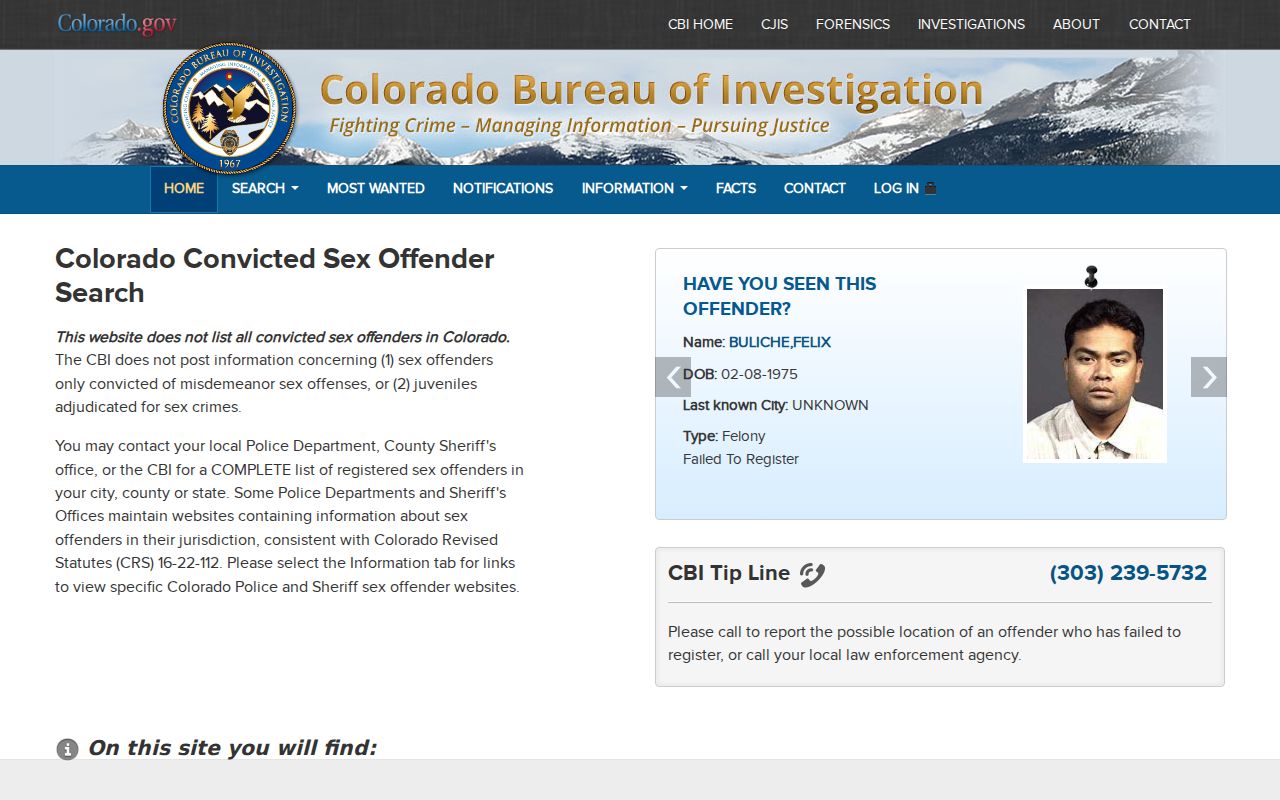
Its limited subject and statutory exclusions make direct county and court checks essential.
The CBI unit page provides another official explanation of that narrow registry role.
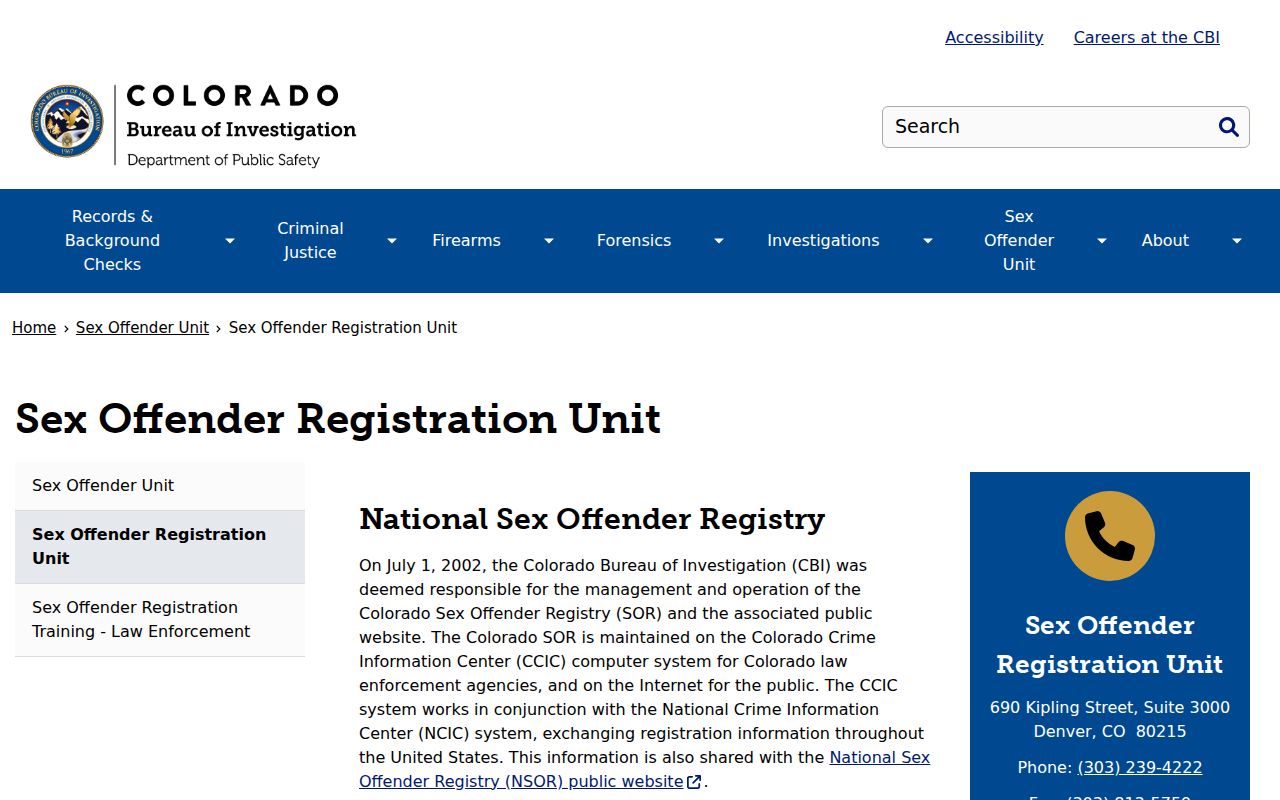
Neither screen should be presented as a list of all Colorado arrest or bench warrants.
Restricted Colorado Warrant Records
Juvenile warrants, sealed cases, protected victim data, and active investigative affidavits may be withheld or redacted. A search-warrant affidavit can remain sealed during an investigation even after a public case entry appears. Public lists also omit records that an authorized law enforcement user can see. A no-result message must not be described as proof that no warrant exists.
Federal warrants are separate. The U.S. Marshals Service District of Colorado and federal courts do not place their active enforcement data in a Colorado county database. A federal detainee may appear in a local contract jail after execution, but the underlying federal process stays federal. Requests for releasable sheriff records use that agency's criminal-justice-record procedure; court records come from the issuing clerk.
For a releasable law-enforcement record, describe the agency, incident, date range, person, and warrant or report number instead of requesting everything about a name. The sheriff can redact active-investigation, security, victim, and protected personal information. A denial should identify the legal basis and whether a segregable public portion exists. The Colorado Criminal Justice Records Act process does not turn a local agency into custodian of another county's warrant, and the filing clerk remains the source for court orders.
Note: Redaction removes protected details, while sealing restricts access to the record under statute or court order.