
Colorado Criminal Court Records
A criminal case file belongs to the Colorado court where prosecution was filed. It can contain the complaint, information or indictment, counts and statute citations, bond orders, counsel appearances, motions, plea, verdict, judgment, sentence, restitution, probation activity, and appeal notices. It differs from an arrest and charge record, which starts with law enforcement and prosecutor actions before the full case develops.
County Courts hear misdemeanors, petty offenses, state traffic crimes, and the complaint, advisement, bond, and preliminary stages of many felonies. Once a felony is bound over or formally filed, District Court carries the merits, plea, trial, judgment, and sentence under a separate case number. Every county has a state Clerk of Court, but the specific county and case class determine which file to request.
Search Colorado Criminal Court Records
Use the free Colorado Judicial Branch Docket Search to locate scheduled District or County Court events. It requires a date plus another filter and excludes Municipal Courts. A result is calendar data, not the full history. Approved commercial registers linked by the branch can show real-time event indexes, but they are unofficial and supply no document PDFs.
- Search a likely hearing window by defendant name, case number, county, court, or attorney.
- Save the complete case number, court type, courthouse, hearing label, and filed name spelling.
- Request the ROA, operative charging instrument, disposition, and sentence from the filing clerk.
- Read every count and later event; a dismissed count may coexist with a conviction on another.
- Order certification when the record must be submitted to another court, agency, or licensing body.
For a compiled statewide history, use the Colorado Bureau of Investigation Criminal History Record Information system. CBI history is built mainly from fingerprinted arrest submissions and later disposition reporting. It is not a certified copy of court pleadings, does not necessarily include tickets or summonses without fingerprints, and excludes sealed and specified juvenile or young traffic arrests from public output.
Colorado Criminal Case Stages
Arrest and booking create law-enforcement and jail records. The court record begins as a complaint, advisement, bond order, or charging instrument is filed. A prosecutor may amend, add, or dismiss counts. Discovery exchanged between prosecution and defense is not public merely because the parties possess it; it becomes a court record only when filed and not otherwise protected.
Case flow: Charges Filed › Arraignment › Pretrial / Motions › Plea or Trial › Disposition › Sentencing
- Charges filed: A complaint, prosecutor's information, or grand-jury indictment states each alleged count.
- Arraignment: The court states allegations and rights and takes a permitted plea.
- Pretrial and motions: Parties litigate evidence, procedure, bond, and other requests through filings and orders.
- Plea or trial: The case resolves by dismissal, agreement, acquittal, or conviction.
- Disposition and sentence: Orders resolve counts and state custody, probation, costs, restitution, and credit where applicable.
What Colorado Criminal Records Show
The register supplies useful metadata, but the operative document controls. Colorado case numbers combine a filing year, case class, and sequence. CR commonly identifies a District Court criminal case, while County Court matters use other classes. A similar name or date of birth alone cannot establish identity, so match the case number, county, event date, and lawful identifiers.
| Field | What It Shows |
|---|---|
| Case Number | Filing year, case class, and sequence tied to one court file. |
| Defendant | Filed name and public identifiers, subject to redaction. |
| Charges | Count, offense, statute, level, offense date, and later amendments. |
| Plea | The formal answer to each count and any later plea change. |
| Disposition | Dismissal, deferred result, acquittal, or conviction by count. |
| Sentence | Custody, probation, fines, restitution, credit, and related orders. |
| Register Events | Chronological filings, hearings, orders, warrant activity, appeal, and closure. |
Colorado Charges Versus Convictions
A charge is an allegation. A conviction is a judgment of guilt after a plea or verdict. Colorado files may show counts that were reduced, amended, dismissed, deferred, or rejected while other counts reached conviction. The operative information or indictment and signed count-by-count disposition provide a stronger answer than a booking label or hearing title.
| Charge | Conviction | |
|---|---|---|
| Meaning | Formal allegation | Judgment of guilt |
| Source | Complaint, information, or indictment | Judgment and disposition order |
| Possible change | May be amended, dismissed, or reduced | May be reviewed on appeal or affected by later relief |
| Best proof | Current charging instrument | Certified disposition and sentence |
Read Colorado Criminal Dispositions
Dismissed means a count ended without conviction, but the reason and whether refiling is barred matter. Acquitted means a not-guilty verdict. A guilty plea or verdict can support conviction once judgment enters. A Colorado deferred judgment delays entry or final effect while conditions are completed; successful completion may permit dismissal, but the record does not vanish automatically. Read later entries for revocation, withdrawal, dismissal, appeal, mandate, or sealing.
Sentence terms can include incarceration, probation, fines, costs, restitution, credit for time served, and conditions. Probation is court supervision and remains in the case record. Parole follows prison under corrections authority and is not the same as County Court probation. A scheduled sentencing hearing does not prove the sentence imposed, so obtain the signed order.
Colorado Sealing Versus Expungement
Adult Colorado criminal relief is usually called sealing. Expungement is narrower and applies especially to certain juvenile records. Eligibility can depend on the disposition, offense class, sentence completion, later charges, and statutory waiting periods under Colorado law, including the official Title 16 criminal procedure provisions. Serious, violent, sex-related, and other excluded offenses may not qualify. A public no-result screen is not proof that a case was legally sealed.
| Sealed | Expunged | |
|---|---|---|
| Primary use | Adult arrest and criminal-case relief | Narrow statutory remedy, notably juvenile matters |
| Public effect | Restricted from ordinary public access | Effect defined by the particular expungement statute |
| Authorized access | Justice agencies and listed users may retain access | Depends on the statute and order |
| Process | Automatic or petition-based when eligible | Separate statutory petition or procedure |
Access Colorado Criminal Court Records
Chief Justice Directive 05-01 governs public, remote, courthouse-only, compiled, and excluded court records. The Colorado Criminal Justice Records Act, C.R.S. sections 24-72-301 through 24-72-309, governs records held by criminal-justice agencies. The filing clerk is custodian of pleadings and orders, while the arresting agency holds its own report.
Key Statutes:
CJD 05-01 separates open remote records from courthouse-only and excluded material.
C.R.S. sections 24-72-701 through 24-72-710 establish adult criminal-record sealing mechanisms.
Colorado Criminal History Checks
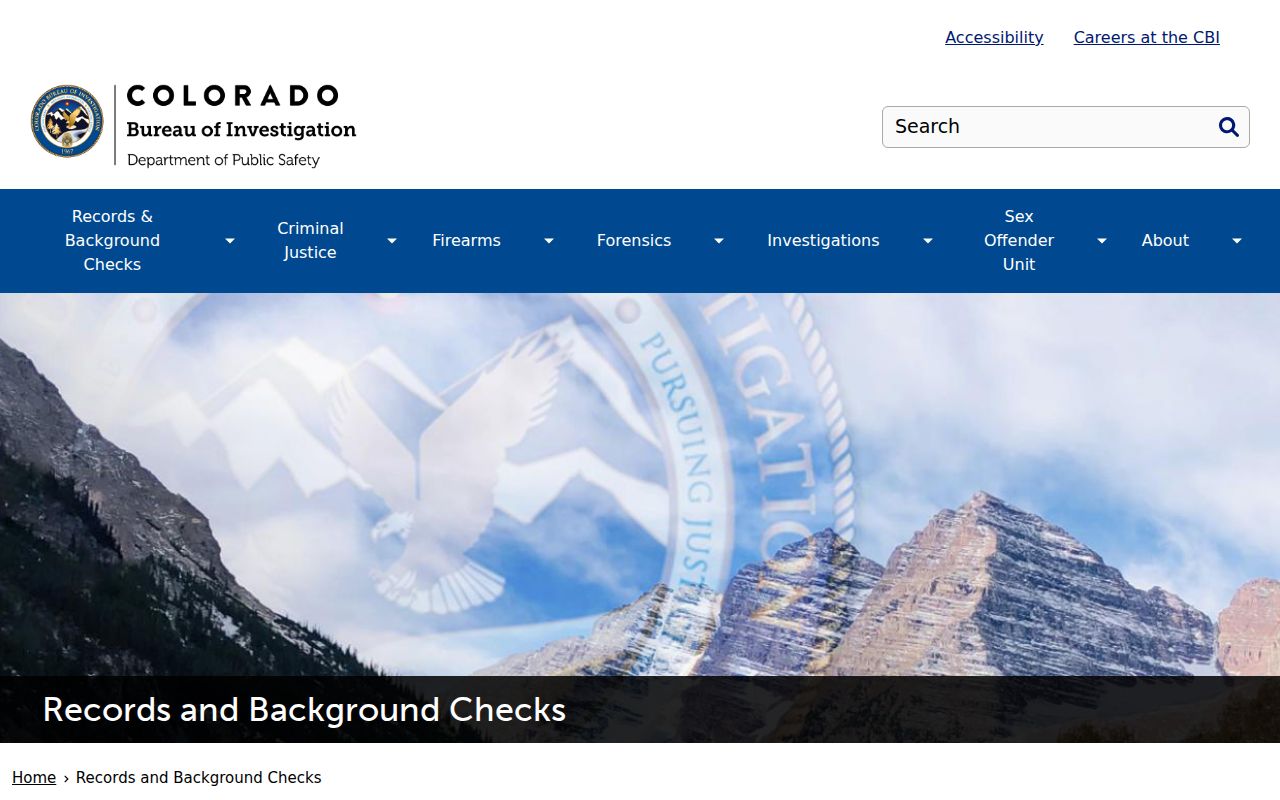
The Colorado Bureau of Investigation records hub separates compiled history from court documents.
Its Internet Criminal History Check is Colorado-only and name based. The search recommends first name and date of birth, requires last name, and permits an optional Social Security number through the verified system. Each viewed potential match costs $6. Common names may produce multiple candidates, so payment does not guarantee the correct identity.
A staffed name-and-date-of-birth CHRI request costs $13 and can be notarized on request. A public fingerprint Colorado history costs $16.50 plus applicable vendor service charges. The official CBI fees and forms page supplies the form and channels.
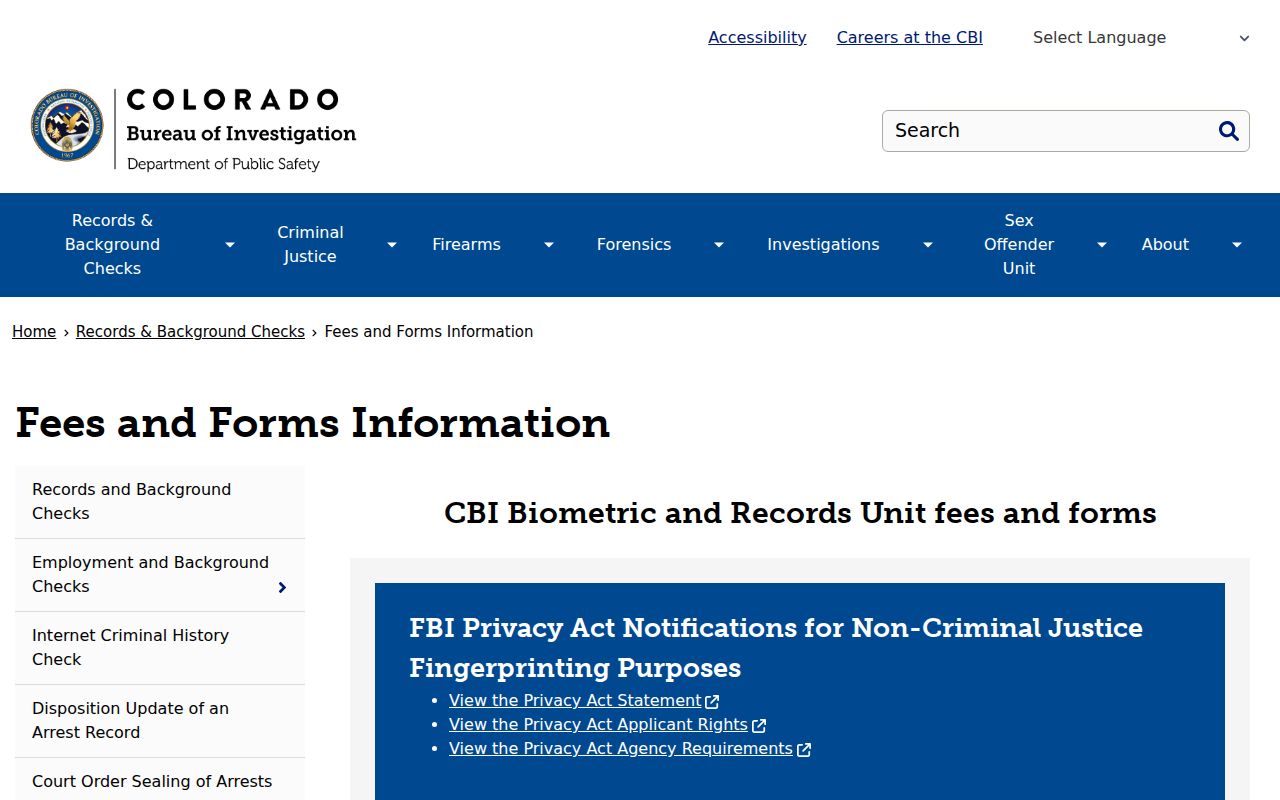
A CBI mismatch should be handled through its disposition-update or challenge process, often using a certified court order. Fix the originating official record before asking a display service to change its data.
Important: Consumer reports used for employment, housing, credit, or insurance require lawful FCRA procedures beyond a casual court search.
Restricted Colorado Criminal Records
Juvenile files, sealed cases, protected victim data, medical information, financial identifiers, and records excluded by court order may be unavailable or redacted. Active-investigation material held by police or prosecutors is not automatically public merely because a court case exists. A party or attorney may have access the general public lacks, but the clerk can require identification and proof of authority.
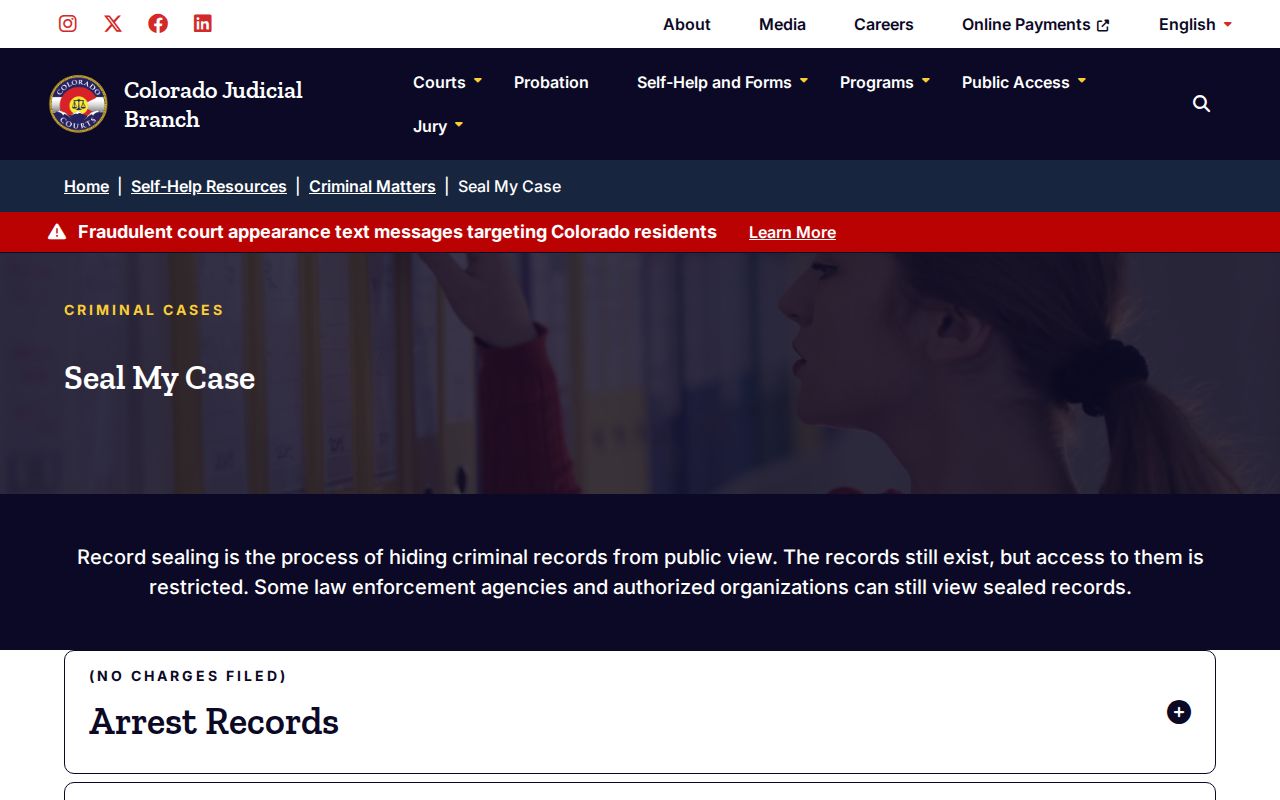
The Judicial Branch's criminal sealing resources organize current forms by case outcome and type.
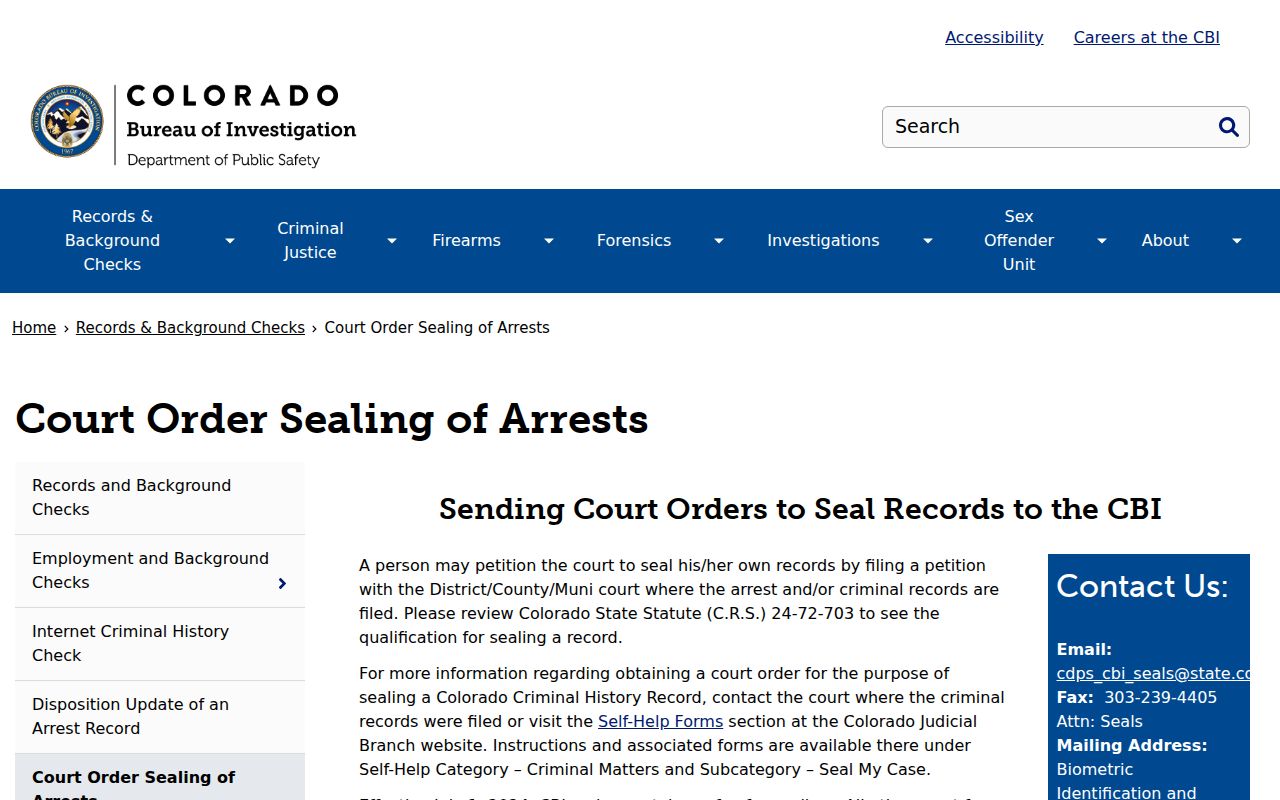
Since July 2024 CBI charges no separate processing fee for a court sealing order, though court filing or other costs may remain.
The CBI sealing implementation page explains that statewide processing step.
After relief is granted, retain the signed order and confirm transmission to CBI and all listed custodians.
For source documents, open the Colorado county directory and contact the Clerk of Court where the case was filed. Request the ROA, operative charge, plea or verdict, disposition, and sentence rather than an undefined “whole background.” Older files can require offsite retrieval. Municipal offenses stay with the city court, and the official county file remains the best source for a count-by-count outcome.
A useful disposition packet may also include a public plea agreement, minute order, restitution order, later dismissal, sealing order, or appellate mandate. Certification matters when a licensing body, corrections agency, or another court needs official proof. If CBI shows an arrest without the result, obtain the certified Colorado disposition and use the CBI update channel. Reporting lag or identity mismatch can explain the gap; it does not change the signed order.
Custody is a separate track. County jail time can be pretrial or a local sentence, while DOC custody follows a state prison sentence and transfer. Location alone never proves conviction. A Colorado criminal court record provides the judgment and sentence; a jail roster supplies booking custody, and DOC supplies prison or supervision status.