
Colorado Arrest Records and Charges
Colorado arrest records document police restraint based on a warrant or probable cause. The arresting agency may hold the incident report and probable-cause material. A county jail booking can add fingerprints, a photograph where published, booking number, intake time, arresting agency, preliminary offense labels, holds, and bond data. Neither source proves that a prosecutor filed the same allegation or that guilt was established.
The district attorney screens evidence and decides what to file. A summons can begin a case without a custodial arrest, and an arrest may end without a filed charge. Once filed, the court charge record belongs to the Clerk of Court. The later Colorado criminal case file tracks pleas, motions, trial, disposition, and sentence. Each record answers a different question.
Find Colorado Arrest Records
Start with the county of arrest, the agency that made the arrest, and the jail that accepted the person. Current booking detail belongs to the sheriff or detention agency. The arrest report comes from the arresting police department or sheriff through its CCJRA process. CBI cannot supply another agency's arrest report.
- Confirm legal name, spelling variants, date of birth, arrest date, agency, and likely county.
- Check the official county jail roster for booking number, holds, and custody, allowing time for intake.
- Use Colorado Docket Search for a state-court setting, then save the case number and courthouse.
- Request the operative charging document and signed disposition from the filing clerk.
The free Judicial Branch Docket Search is a hearing calendar, and Municipal Courts are excluded. Approved commercial registers show unofficial event indexes without documents. For a compiled fingerprint-supported history, use CBI CHRI. For a charge and result, the filing court is authoritative.
Colorado Charges After Arrest
The pathway is incident › arrest or citation › booking when custodial › advisement and bond › prosecutor screening › charging document › plea and motions › disposition › sentence. A jail roster can post before a court case appears. Prosecutors may decline filing, amend counts, or file a different offense from the booking label.
| Complaint | Information | Indictment | |
|---|---|---|---|
| Source | Sworn accusation | Prosecutor | Grand jury |
| Use | Starts proceedings, often County Court or early felony process | Formal felony instrument after bind-over or waiver | Formal charges after a probable-cause finding |
| Limit | May be superseded or amended | May differ from booking allegation | Grand-jury proceedings remain secret |
Each count should state the alleged offense, statute, level, date, and victim designation subject to redaction. The operative document, not the first jail label, defines the prosecution.
Colorado Court Charge Status
Colorado charges can be added, amended, reduced, dismissed, deferred, stayed, or resolved separately. One arrest may produce several counts with different outcomes. Report each count with its statute, offense date, current level, disposition, and disposition date rather than labeling a whole case “dismissed” or “convicted.”
- Pending
- The count remains unresolved; no guilt finding should be inferred.
- Amended or reduced
- The allegation or level changed; read the latest instrument.
- Dismissed
- The count ended without conviction, with refiling effect controlled by law and order.
- Deferred
- Judgment is delayed under conditions; later completion or revocation controls the result.
- Acquitted
- A not-guilty result after trial.
Colorado Charges Versus Convictions
An arrest record and a filed charge are not findings of guilt. A conviction requires a guilty plea or verdict followed by judgment. The complaint may contain allegations later rejected, and an information can replace it. A deferred judgment may later lead to dismissal. Obtain the register, operative charge, plea or verdict, disposition, and later orders before stating an outcome.
| Charge | Conviction | |
|---|---|---|
| Meaning | Allegation | Judgment of guilt |
| Source | Complaint, information, or indictment | Verdict or plea and signed judgment |
| Possible change | Can be added, reduced, amended, or dismissed | Can be reviewed on appeal or affected by later relief |
| Best proof | Current charging instrument | Certified disposition and sentence |
Colorado Sealing Versus Expungement
Colorado normally uses sealing for adult arrest and criminal-case relief. Expungement is narrower, especially for juvenile records. Eligibility depends on the result, offense, sentence completion, later charges, and waiting rules. A seal limits public access but does not erase all justice-agency access. No search result may also mean a wrong county, old data, municipal venue, delayed filing, or restricted display.
| Sealed | Expunged | |
|---|---|---|
| Primary use | Adult arrest and case relief | Narrow statutory remedy, notably juvenile cases |
| Public effect | Restricts ordinary public access | Effect follows the specific statute and order |
| Justice access | Authorized users may retain access | Depends on governing law |
| Process | Automatic or petition-based when eligible | Separate statutory procedure |
Colorado Charge Codes and Levels
Colorado ordinary felonies run from class 1 through class 6, with unclassified offenses. Modern misdemeanor classes include class 1 and class 2, plus unclassified and petty offenses. Drug crimes use separate felony and misdemeanor levels, while traffic infractions and offenses follow their own rules. Classification and sentencing laws can change, so read the cited statute and offense date.
Level also affects venue. County Court handles misdemeanors and early felony proceedings. District Court holds the later felony merits file. A city-code matter may remain in Municipal Court and never appear in state tools. One arrest can therefore produce records in more than one court or case number.
Colorado Statewide Charge History
The CBI Internet Criminal History Check offers Colorado-only, name-based, fingerprint-supported history for $6 per viewed result. It can show arresting agency, arrest event, charges, and dispositions reported by courts, but it excludes sealed arrests and specified juvenile or young traffic arrests from public output. It is not a nationwide FBI search, live warrant check, driving record, or certified court packet.
The official CBI CCJRA request page explains correct custody and redirects outside arrest reports, discovery, and court files.
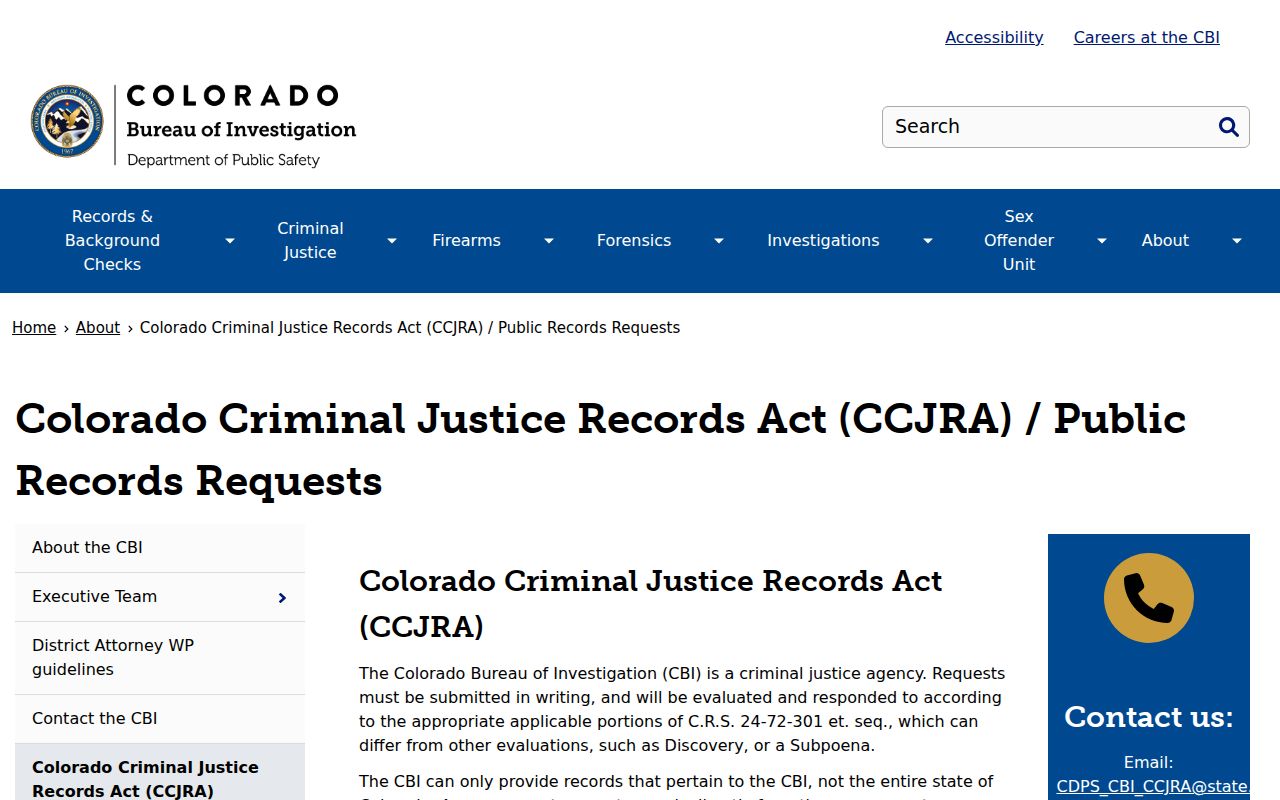
The image reinforces that CBI is not the holder of every police report or county charging document.
Federal charges use federal courts and agencies. The manifest's U.S. Attorney for Colorado source identifies the federal prosecutor.
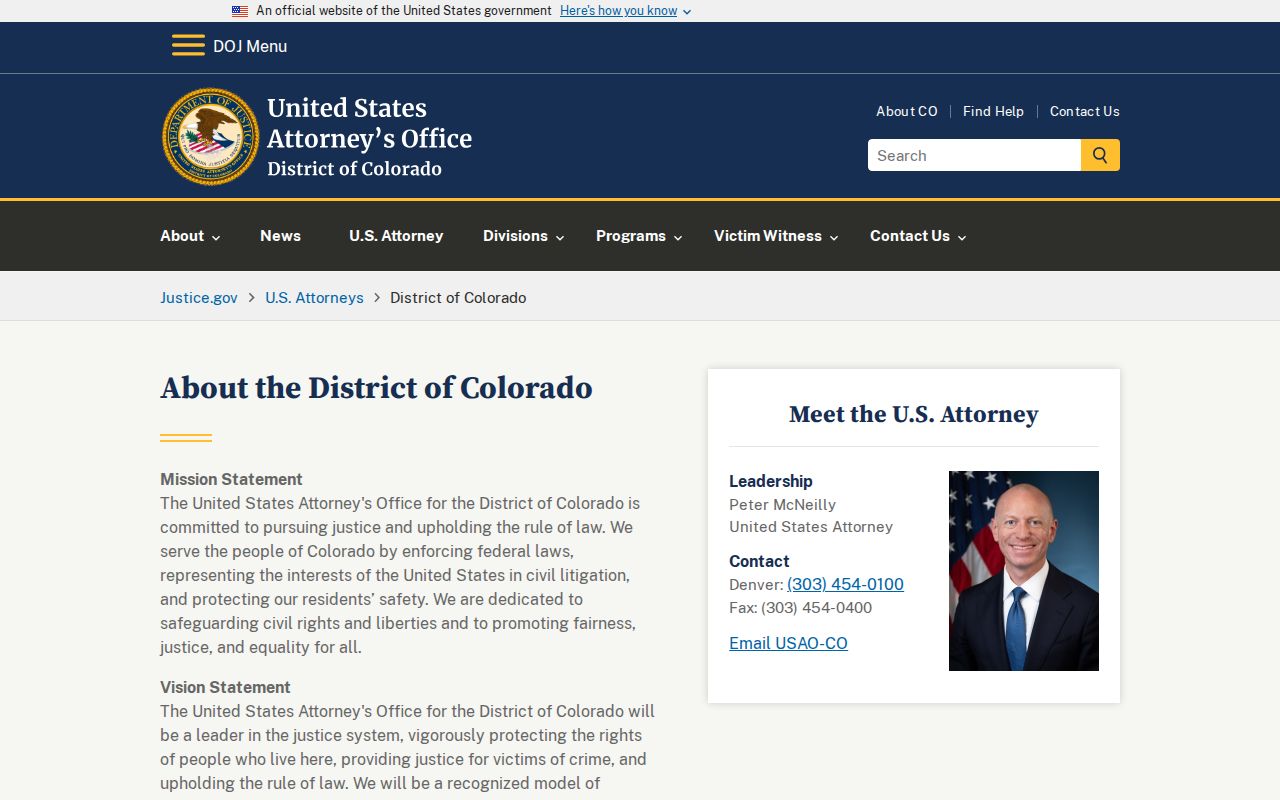
Federal matters do not enter the state docket merely because conduct occurred in Colorado.
Colorado Arrest Record Use
Consumer reports used for employment, housing, credit, or insurance decisions must follow the Fair Credit Reporting Act, including lawful purpose and required notices. A casual public lookup is not a substitute for that process. Identity matching needs more than a shared name. Compare case or booking number, full name, date of birth, county, and event date through verified official channels.
Important: An arrest or filed Colorado charge is an allegation and must never be reported as a conviction without the final court order.
Restricted Colorado Charge Records
Juvenile files, sealed records, active investigations, grand-jury material, protected victim information, medical data, financial identifiers, and records withheld by court order may be inaccessible or redacted. A public docket line can exist while its attachment is protected. Authorized parties may receive material the general public cannot, but must satisfy the custodian's identity and authority requirements.
The county jail image is a representative example, not a statewide booking database. The official Denver Sheriff Inmate Search illustrates local booking custody.
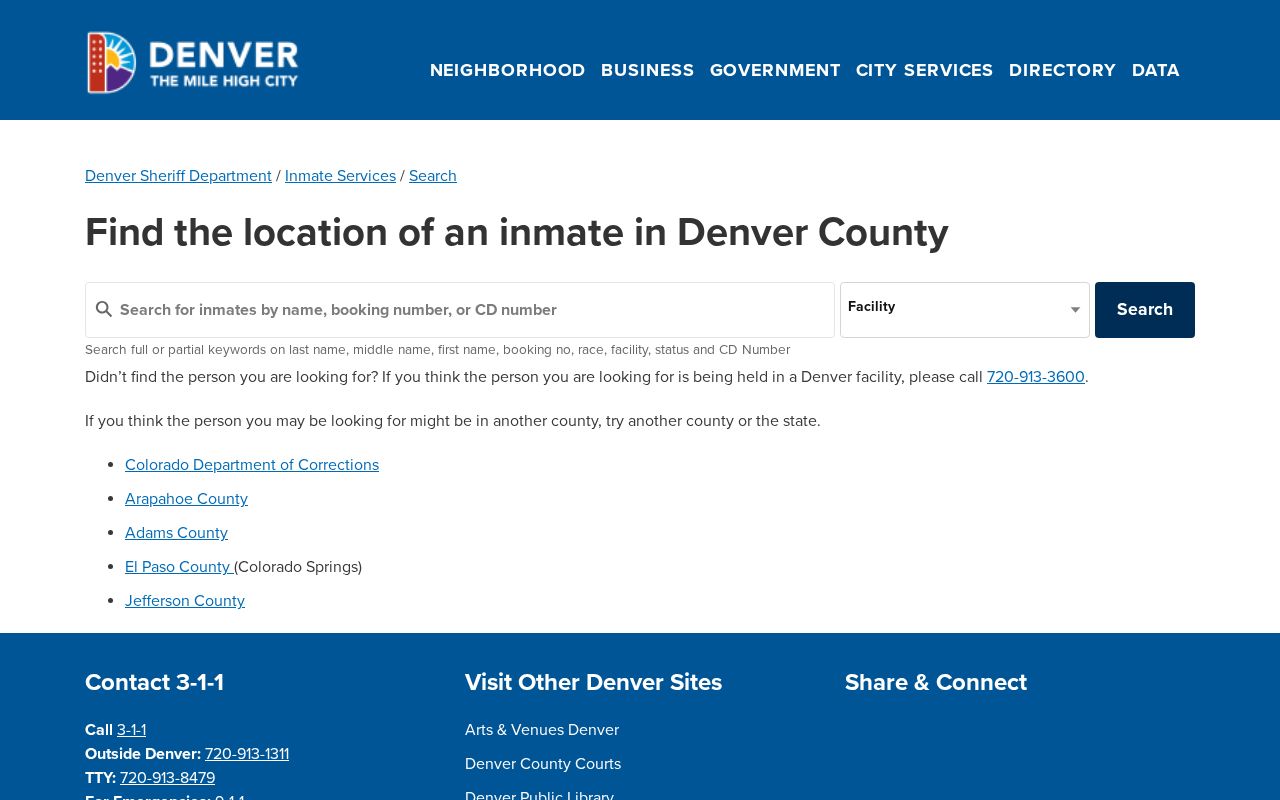
Its fields and coverage cannot be promised for another county. Use the Colorado county directory to reach the arresting agency, sheriff, prosecutor, and filing court for the event. These may be four different custodians. Ask the clerk for the operative charging document and disposition, the police for its report, and the jail for booking data. Municipal charges remain with the named city court.
If a recent jail search returns nothing, verify spelling, aliases, suffixes, booking number, and the agency that transported the person. Intake can delay a listing. Medical clearance, release on summons or bond, a neighboring county's warrant, contracted housing, juvenile custody, or a federal hold can also change the location. Colorado VINE may help locate participating-agency custody, but its feed is not the court case and should not be treated as complete.
A court search can fail for different reasons. The statewide calendar requires a date plus another filter and does not provide an all-years name search. No result may mean no published hearing, a Municipal Court case, an old or offsite file, delayed entry, or restricted access. Search name and date variants, then request a $5 clerk name search in plausible filing counties. City-code charges stay with the court printed on the summons.
Colorado access rules divide records by custodian. CJD 05-01 controls court-file access. CCJRA controls many police, sheriff, and CBI records. An arresting agency may withhold active-investigation work while releasing a public record of official action. Prosecutor discovery follows the defendant's or victim's legal rights, not a broad public demand. Ask for the cited basis of a denial and whether a redacted portion can be released.
Corrections start at the source. A wrong court caption or disposition goes first to the filing clerk and judicial process. A CBI mismatch uses its challenge or disposition-update channel with certified documents when required. A jail booking error goes to the sheriff, while a police-report error goes to that agency. Changing an unofficial display does not alter the signed Colorado court record.
Keep the inspection date with any saved result because booking status, filed counts, bond, and disposition can change as the Colorado case proceeds.